Est.2024


Rs 43,289 Crore Gameplan: How Jane Street Tried to Hijack India’s Derivatives Market
July 6, 2025
Rs 43,289 Crore Gameplan: How Jane Street Tried to Hijack India’s Derivatives Market
Page 1: Executive Summary
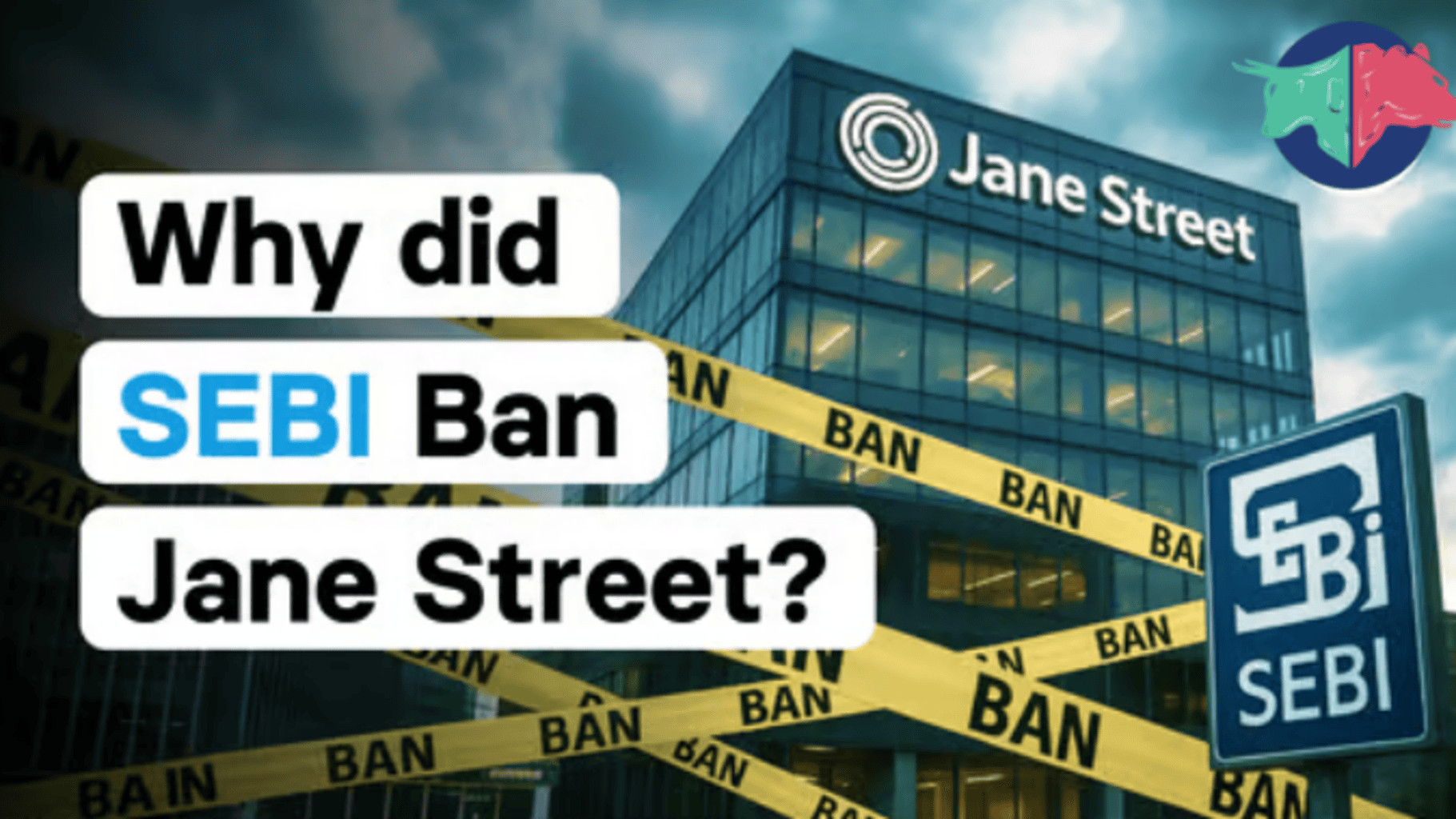
Between January 2023 and March 2025, U.S.-based quantitative trading firm Jane Street Capital manipulated India’s index derivatives market by inflating and crashing prices of Nifty and Bank Nifty through sophisticated algorithmic expiry-day strategies. SEBI’s July 4, 2025, order bans Jane Street and its Indian trading entities (JSATL, JSITPL, JSALLC) and demands the return of Rs 4,843.81 crore in gains, making this the most significant regulatory crackdown in Indian market history.
Page 2: Introduction to Jane Street and its India Presence
Jane Street is globally known for high-frequency trading (HFT) and proprietary quantitative models. Its India-linked FPIs used powerful co-located servers and AI-driven strategies to exploit expiry-day weaknesses in India’s derivatives market. The firm operated silently through:
- Jane Street Asia Trading LLP (JSATL)
- Jane Street India Trading Pte Ltd (JSITPL)
- Jane Street Asia LLC (JSALLC)
These entities used vast financial muscle and ultra-fast servers to dominate expiry-day volumes, especially in Bank Nifty options.
Page 3: SEBI’s Crackdown – Timeline and Action
- Jan 2024: Retail investors flag unusual expiry-day moves
- Mar 2024: NSE surveillance starts anomaly detection
- May 2025: SEBI receives conclusive trade pattern analysis
- July 2025: Ban imposed; Jane Street and associates barred; gains frozen
SEBI Statement: “This case threatens the foundational integrity of price discovery.”
Page 4: The Master Trick: Expiry-Day Pump and Crash
Jane Street played a high-stakes game of pump-and-dump on expiry days:
- Early Pump:
- Placed large buy orders in heavy-weighted Bank Nifty stocks
- Induced upward price movement
- Retail saw breakout and entered calls
- Sudden Crash:
- Mirror trades executed to sell at higher levels
- Index reversed in last 1-2 hours of trade
- Jane Street shorted futures & bought puts simultaneously
This trick trapped retail call buyers and gave them massive gains from crashing premiums.
Infographic Suggestion: A timeline flowchart showing early stock spike (9:30 AM), OTM call premium spike (11:00 AM), and steep index drop (2:45 PM).
Page 5: Mirror Trading Exposed
Jane Street used mirror trading to build fake volume and influence prices:
- Example: JSATL buys HDFC Bank at Rs 1,610.25; JSITPL sells at exact same time and price.
- Used across ICICI, Axis Bank, SBI and Kotak Bank.
- Created artificial demand-supply illusion.
- Triggered price spikes leading to OTM call premium surge.
Infographic Suggestion: Split-screen graphic showing two FPI accounts placing buy/sell orders at the same timestamp with matching prices and volumes.
Page 6: Impacted Stocks and Their Use in Manipulation
| Stock | Manipulation Method | Result |
|---|---|---|
| HDFC Bank | Pumped in early trades | Index push |
| ICICI Bank | Volume game at open | OI build-up |
| SBI | Spike before reversal | Bank Nifty support |
| Axis Bank | Short build-up | Triggered panic fall |
| Kotak Bank | Used for intraday reversals | Retail trapped |
| IndusInd Bank | Fast rise & fall | Stop-loss hunting |
Page 7: Affected Broking and Financial Stocks
The scam may hurt revenue of broking companies:
| Stock | Impact |
|---|---|
| Zerodha (unlisted) | Loss of retail trust, lower expiry trades |
| Angel One | Drop in options turnover volume |
| ICICI Securities | Derivative volume cutbacks |
| IIFL Securities | Revenue hit from lower active traders |
| 5paisa Capital | Reduced expiry-day engagement |
Investors are now shying away from high-risk expiry trades, hurting brokers’ earnings.
Infographic Suggestion: Bar graph showing drop in expiry-day retail trades from Jan 2024 to July 2025.
Page 8: Financial Impact Breakdown
| Metric | Value |
|---|---|
| Total Profit | Rs 43,289 Cr |
| Gains Frozen | Rs 4,843.81 Cr |
| Losses in Cash Segment | Rs 7,687 Cr |
| Retail Loss Ratio | 90-93% |
| Daily Profits (Avg) | Rs 40-50 Cr on expiry |
Page 9: Timeline of Major Expiry Manipulations
- Jan 17, 2024: Bank Nifty rises 2% in 45 mins, falls 2.5% in last 30 mins.
- Mar 28, 2024: 5 of 6 Bank Nifty stocks show 20-40% intraday OI spike.
- June 27, 2024: Mirror trades repeated in Kotak, ICICI, and SBI within seconds.
- Dec 26, 2024: Over 12,000 synchronized trades flagged by NSE.
Page 10: Public Impact and Retail Reaction
- Over 40 lakh retail traders affected during 15-month period.
- Many lost savings in weekly options, especially on Thursdays.
- Retail participation in Bank Nifty fell 30% post-ban.
- Increased shift towards safe instruments: equity SIPs and covered options.
Infographic Suggestion: Pie chart comparing pre- and post-ban retail participation in Bank Nifty options.
Page 11: How SEBI Detected the Scam
- NSE used AI anomaly detection systems.
- Mapped microsecond latency across trades.
- Cross-referenced matching trades between different Jane Street FPIs.
- Highlighted cases of volumes without fundamentals.
Page 12: Understanding Mirror Trading for Beginners
Mirror Trading = Buy & sell same stock at same price, time, and volume using two separate accounts (but same owner).
Used to:
- Inflate stock volume
- Mislead chart indicators
- Trigger breakout traps
- Trap retail with fake rallies
Jane Street mastered this with ultra-speed bots.
Page 13: Why Bank Nifty was the Target
- Most volatile index
- Weekly expiry allowed repeated manipulation
- High retail involvement
- Easy to distort via few banking heavyweights
Jane Street could control 40-50% of expiry-day volume using this strategy.
Page 14: Regulatory Loopholes Used
- No synchronisation check between FPIs
- Co-location server abuse
- Options margin loopholes
- Delay in audit of expiry day trades
Page 15: Reactions from Experts
- SEBI Chairman: “Jane Street’s actions threaten India’s capital market fabric.”
- Veteran Analyst: “It’s expiry-day terrorism. Plain and simple.”
- Retail Investor: “I followed the trend. It was fake. I lost 6 months’ salary.”
Page 16: Global Comparisons
- U.S. CFTC fined several firms for spoofing
- EU has stricter latency-based trade caps
- HK mandates trade audit logs within 24 hours
- India is now matching global enforcement rigor
Page 17: What Happens Next
- SEBI to require whitelisting of all algos
- Real-time cross-FPI pattern matching
- Broker-level expiry trade risk alerts
- Trading bans for coordinated algo players
Page 18: Advice for Retail Investors
- Avoid Thursday-only trades
- Don’t chase early spikes in Bank Nifty
- Use risk-controlled strategies: spreads, covered calls
- Track NSE open interest live dashboards
Page 19: Gujju Traders Warnings
- “If it looks too good to be true, it’s likely a trap.”
- “Watch volume without news – it’s a rigged breakout.”
- “Avoid stocks with unusual expiry-day candles.”
Page 20: Conclusion and Final Punchline
The Jane Street case exposes the vulnerabilities of India’s retail-dominated expiry-day trading culture. However, SEBI’s strong action is a message to all global manipulators – India is no longer a playground for rigged trades.
“Expiry ka Sikka, Retail ka Jhatka – Jab Jane Street Ne Khela Crorepati Ka Khel!”
Stay Smart. Stay Informed. Follow Gujju Traders.